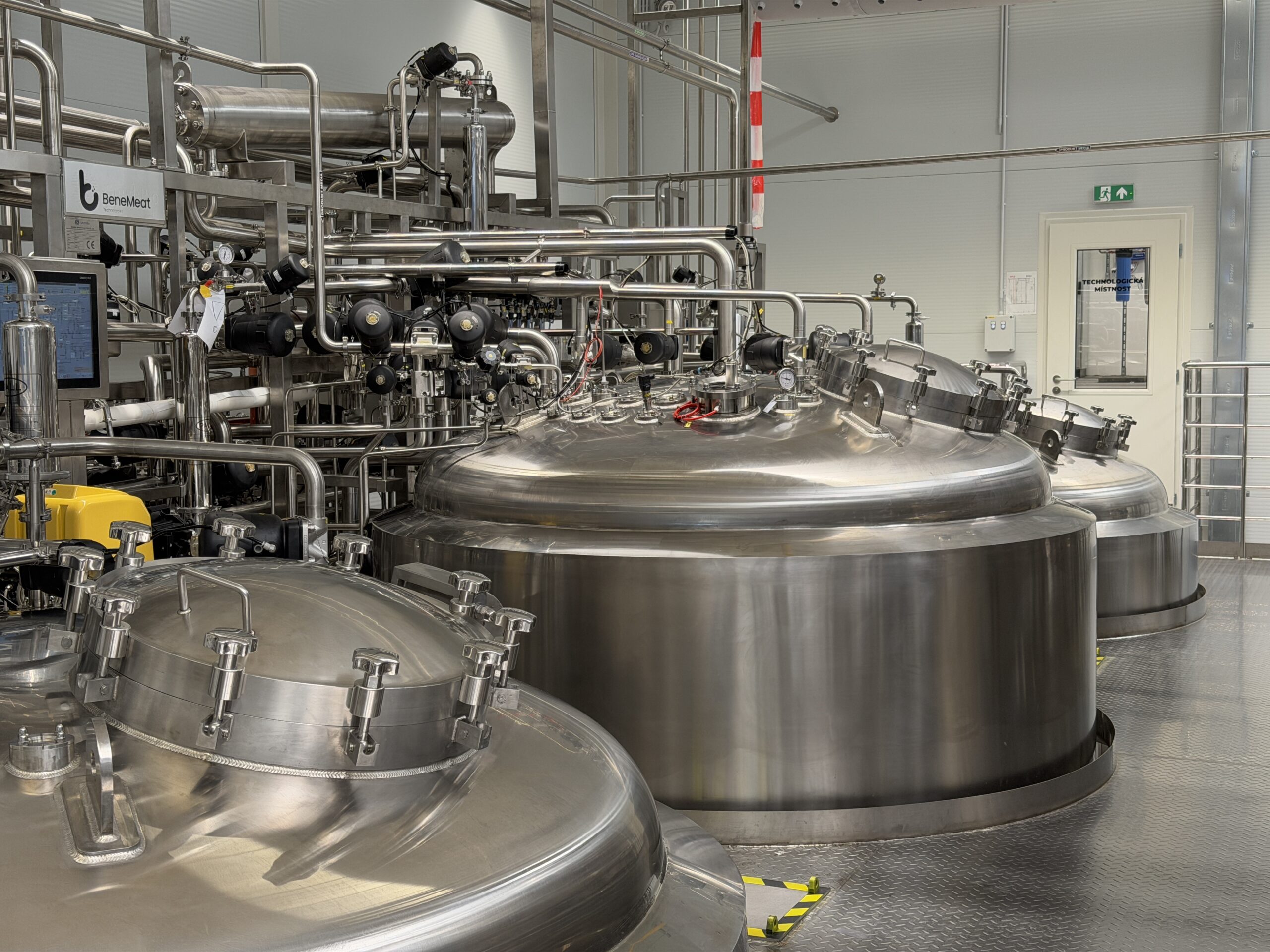
For many people, the word “bioreactor” brings to mind something mysterious and unnatural. A laboratory full of machines, flashing lights, and complex technologies. The word itself can sound a bit dangerous. In reality, however, a bioreactor is much simpler than it seems. And if you’ve ever visited a brewery, you’ve already seen a device very similar to a bioreactor.
From beer to cultivated meat
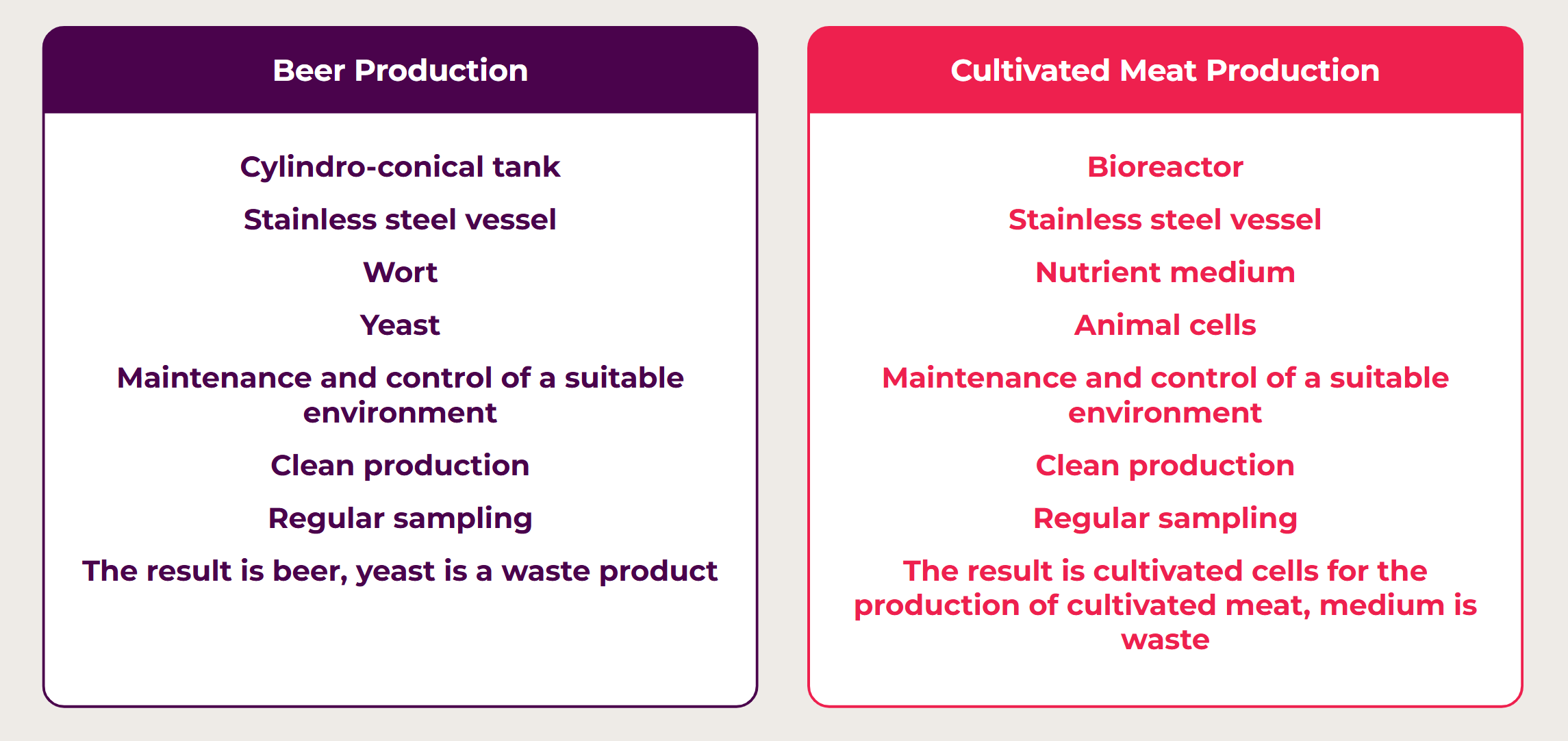
In breweries, large stainless steel vessels called cylindro-conical tanks are used for the fermentation of beer. This is where the main part of beer production takes place.
Chilled wort is poured into the tank, yeast is added, and the biological process of fermentation begins. After a few days or weeks, depending on the type of beer, temperature, and amount of yeast, beer is produced.
Throughout this entire time, the tank creates ideal conditions. Temperature, purity, pressure, and, potentially, oxygen content are monitored. Brewers regularly take samples, and brewery laboratories monitor the progress of the production process.
A bioreactor works on the same principle. However, instead of yeast, animal cells work inside it.
What happens inside a bioreactor?
A nutrient medium containing water, sugars, amino acids, vitamins, minerals, and other substances that cells need for their growth is added to the bioreactor. Then, a small amount of cells is added.
These cells begin to grow naturally, similar to how cells multiply in an animal’s body. The bioreactor only ensures a suitable environment for them, meaning they have the correct temperature, sufficient nutrients, oxygen, and a clean environment.
What do a brewery and cultivated meat production have in common?
Surprisingly a lot. Both technologies use biology. The only difference is what organism grows inside the tank.
Why do we actually need a bioreactor?
Just as quality beer cannot be produced in an open barrel in the garden (historically, open vats were used for its fermentation, but they were placed in cellars where the enclosed space created a controlled atmosphere), cells cannot grow in an ordinary container either. They need a stable environment, precise temperature, correct pH, sufficient oxygen, nutrients, and absolute purity. This is exactly what the bioreactor provides.
Therefore, it is not a device that produces something itself. It is a safe and precisely controlled environment where cells can do what they naturally know how to do: grow. It is not a new technology
Bioreactors were not invented because of cultivated meat. They have been used for decades in the production of pharmaceuticals, vaccines, enzymes, certain vitamins, or, for example, insulin for diabetics. The food industry and brewing also use the same principle. Thus, cultivated meat does not rely on an unknown technology. It uses equipment that merely creates suitable conditions for a different type of cell.
When you hear the word bioreactor…
…imagine a modern brewery rather than a mysterious laboratory. It is a large stainless steel tank in which a carefully controlled biological process takes place. In a brewery, it produces beer. In cultivated meat production, it helps animal cells grow. The technology is different, but the principle is surprisingly similar.